Image Tagging for SEO: How to Boost Rankings with Smart Image Optimization
Introduction
In the race for better search rankings, most marketers obsess over keywords, backlinks, and content length. But there’s a powerful, often overlooked factor quietly influencing SEO performance—image tagging.
Images are no longer just visual enhancements. When properly tagged, they become data-rich assets that search engines can interpret, index, and rank. If you’re not optimizing your images, you’re leaving traffic—and visibility—on the table.
Why Image Tagging Matters
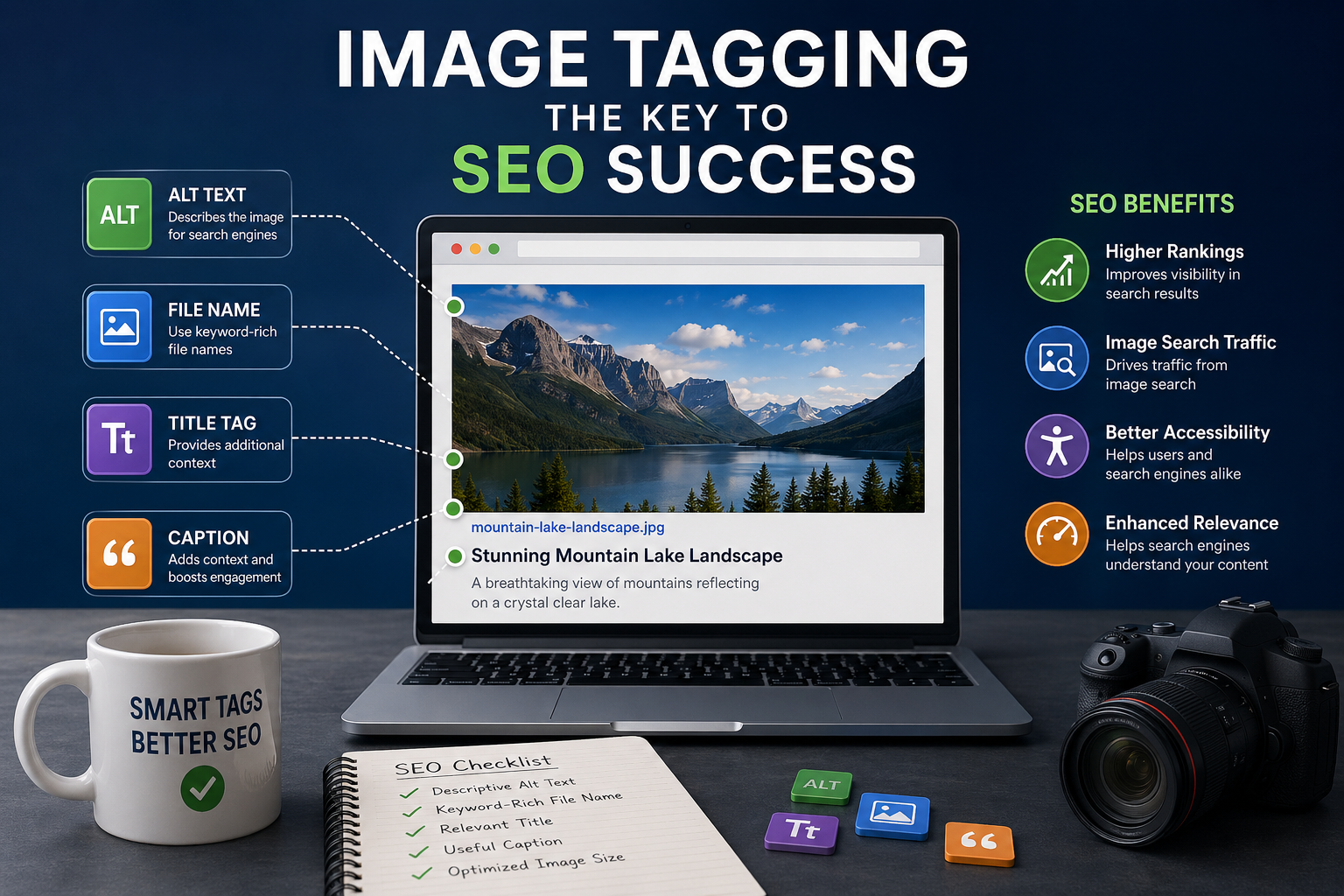
Search engines can’t “see” images the way humans do. They rely on metadata and tags to understand what an image represents. This is where image tagging becomes critical.
Well-tagged images help:
- Improve page relevance
- Boost visibility in image search
- Enhance accessibility
- Increase user engagement
Types of Image Tags That Impact SEO
1. Alt Text (Alternative Text)
Alt text describes the image for search engines and screen readers.
Example:
alt="Aerial view of city skyline at sunset"
It should be:
- Descriptive
- Concise
- Keyword-aware (not stuffed)
2. File Names
Before uploading, rename your image files with meaningful keywords.
Bad:
IMG_1234.jpg
Good:
image-tagging-seo-example.jpg
3. Title Tags
Although not as critical as alt text, title tags provide additional context and can improve user experience.
4. Captions
Captions are among the most-read elements on a page. They provide context and increase engagement.
How Image Tagging Boosts SEO Performance
Improved Image Search Rankings
Proper tagging allows your images to appear in Google Image Search, opening an additional traffic channel.
Enhanced Page Relevance
Search engines use image data to better understand your page content, strengthening keyword relevance.
Better Accessibility = Better SEO
Accessible content is favored by search engines. Image tags help visually impaired users, which indirectly boosts rankings.
Tools like GeoImageTagger help automate image tagging, GPS metadata embedding, and SEO-friendly image optimization workflows. You can inspect your image's existing tags and metadata with the free Metadata Viewer, compress files while preserving metadata using the Image Compressor, and convert between formats with the Image Converter.
Best Practices for Image Tagging
- Use descriptive, keyword-rich alt text
- Keep file names clean and readable
- Compress images for faster loading
- Use structured data when applicable
- Avoid keyword stuffing
Visual Example
 Toronto
Common Mistakes to Avoid
- Missing alt attributes
- Using generic file names
- Over-optimizing with keywords
- Ignoring image size and performance
Future of Image SEO
With advancements in AI and visual search, image tagging is becoming even more critical. Search engines are getting smarter, but metadata still plays a key role in interpretation.
Conclusion
Image tagging is not just a technical detail—it’s a strategic SEO advantage. By optimizing your images properly, you enhance visibility, improve user experience, and gain a competitive edge.
Start treating your images like content, not decoration—and watch your SEO performance grow.
Want to automate image geotagging and EXIF metadata optimization? Start with the free Metadata Viewer to inspect your images, then try GeoImageTagger for AI-powered tagging and metadata workflows.
← Back to Blog